


Wet Mix and Dry Mix Concrete Plant
- Conmach Machine

- 3 days ago
- 3 min read
Choosing the right Wet Mix and Dry Mix Concrete Plant is one of the most important decisions for achieving high-quality concrete production and efficient construction operations. Understanding the differences between a Wet Mix and Dry Mix Concrete Plant helps contractors, ready-mix producers, and construction companies select the most suitable solution according to project size, production capacity, transportation distance, and investment budget. Every Wet Mix and Dry Mix Concrete Plant offers unique advantages depending on the production process and operational requirements.
Wet Mix and Dry Mix Concrete Plant: What Are the Main Differences?
The primary difference between a Wet Mix and Dry Mix Concrete Plant is where the concrete mixing process takes place. In a wet mix concrete plant, cement, aggregates, water, and chemical admixtures are completely mixed inside the plant before being discharged into the concrete truck. In contrast, a dry mix concrete plant measures all materials accurately, but the final mixing occurs inside the transit mixer while traveling to the job site. Understanding these differences is essential when selecting the most suitable Wet Mix and Dry Mix Concrete Plant.
Wet Mix and Dry Mix Concrete Plant: Advantages of Wet Mix Systems
A Wet Mix and Dry Mix Concrete Plant comparison shows that wet mix systems provide superior concrete consistency and quality control. Since mixing is completed before transportation, the concrete arrives at the construction site with a uniform composition. This makes a Wet Mix and Dry Mix Concrete Plant with a wet mix system ideal for bridges, dams, airports, tunnels, and large infrastructure projects requiring high-strength concrete.

Wet Mix and Dry Mix Concrete Plant: Advantages of Dry Mix Systems
Another important aspect of a Wet Mix and Dry Mix Concrete Plant comparison is the flexibility of dry mix plants. These systems generally require lower initial investment and simpler maintenance while allowing water to be adjusted according to job-site conditions. A Wet Mix and Dry Mix Concrete Plant with a dry mix configuration is commonly preferred for residential developments, commercial buildings, and projects where transportation distances are relatively short.
Wet Mix and Dry Mix Concrete Plant: Production Efficiency
Production efficiency is a key factor when evaluating a Wet Mix and Dry Mix Concrete Plant. Wet mix systems typically deliver higher output and more consistent concrete because automated mixers perform the complete mixing process inside the plant. Dry mix systems rely on transit mixers for final blending, making transportation time an important part of the production cycle. Choosing the right Wet Mix and Dry Mix Concrete Plant improves productivity while reducing operational costs.
Wet Mix and Dry Mix Concrete Plant: How to Choose the Right Solution?
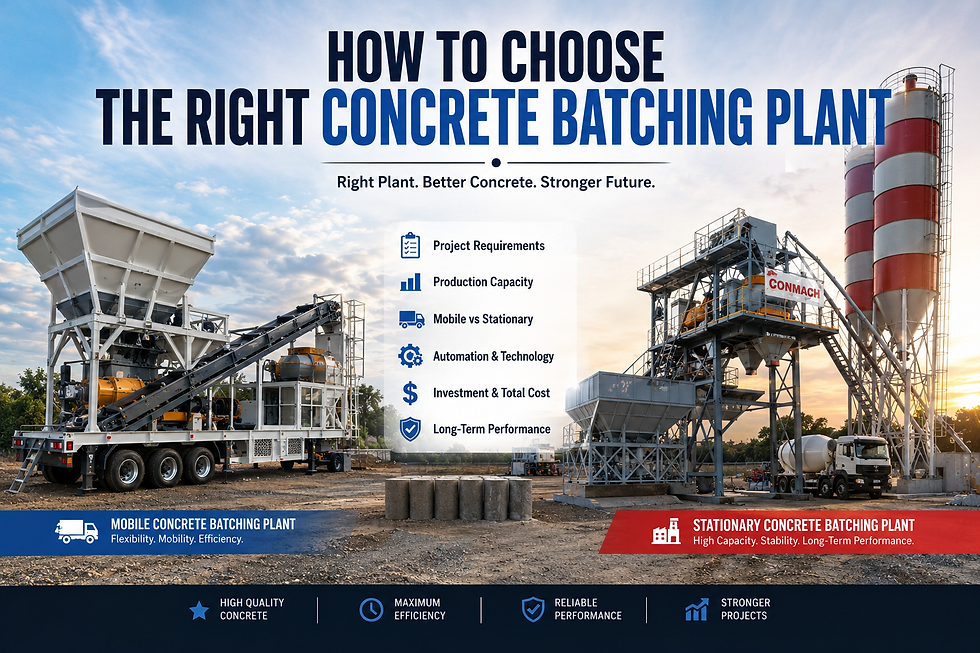
Selecting the best Wet Mix and Dry Mix Concrete Plant depends on project duration, daily concrete demand, quality standards, site location, and available investment budget. Contractors producing large volumes of concrete usually benefit from wet mix technology, while companies requiring mobility and lower investment costs often choose dry mix systems. Evaluating all operational requirements helps determine the most suitable Wet Mix and Dry Mix Concrete Plant for long-term success.
Conclusion: Wet Mix and Dry Mix Concrete Plant
Understanding the differences between a Wet Mix and Dry Mix Concrete Plant allows construction companies to make informed investment decisions. Whether choosing wet mix for maximum concrete quality or dry mix for operational flexibility, selecting the right Wet Mix and Dry Mix Concrete Plant improves production efficiency, lowers operating costs, enhances concrete consistency, and supports sustainable business growth.

Comments